A royal daughter on a suicide mission, for an interplanetary
war she doesn't support?
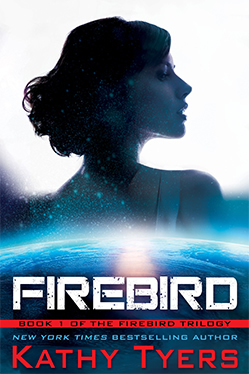 If you add a telekinetic stranger and an ancient prophecy,
that pretty much describes Kathy Tyer’s Firebird,
the first of five books about Lady Firebird Angelo and her family.
If you add a telekinetic stranger and an ancient prophecy,
that pretty much describes Kathy Tyer’s Firebird,
the first of five books about Lady Firebird Angelo and her family.
Sometime during my last semester of college, I ran across Firebird in the college library. I had a
couple hours between classes, and I desperately needed something to read
besides Bible study material and literature criticism, so I pulled the book off
the shelf and started in.
Now, Firebird is
not a short book. When it came time for my next class, I was only part way
through, so of course, I had to take the book down to the librarian’s desk and
check it out.
I really enjoyed the read at the time. Then, in August last year, I picked up Firebird again, after
noticing the final book in the series, Daystar,
among the 2013 Clive Staples Award nominees. I really meant to review the series back then, but late is (usually) better then never, and it's almost never too late to pick up a good read. Plus, Firebird gets another new cover this fall, courtesy of Enclave Publishing (which is itself a restart of Marcher Lord Press, a fairly popular Christian Speculative Fiction publishing house).
My description of Firebird
is pretty simple, but the series is not. The original trilogy focuses on Lady
Firebird’s story, but the story's background centers around a race of
genetically-altered humans and the Messianic prophecy about one of their
families. A remnant of these Ehretans escaped the Earth’s destruction and the
more skilled became special-force Sentinels in their new home world. Firebird sticks with the classic space opera story. The rest of the series explores a lot more of the history and prophecies behind the Ehretans, while still maintaining a high level of action and suspense.
It's hard to say anything more without giving spoilers, so I'll just recommend it with enthusiasm. I found the books highly entertaining, as well as thought provoking, and as a Christian sci-fi story, this one's a classic.


No comments:
Post a Comment