Pages

Wednesday, November 27, 2013

Image and Imagination: Review


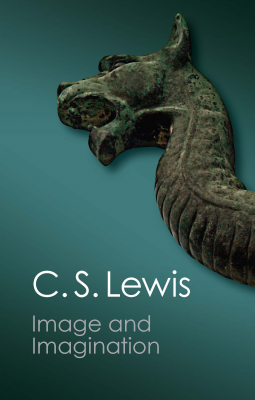
Last week, a number of bloggers posted in commemoration of C. S. Lewis’s death 50 year ago. (In particular, you might like the posts by Lars Walker and Rebecca LuElla Miller.) While I grew up reading Lewis’s Narnia series and have since read a large group of his other works, I don’t have anything profound to add to their thoughts. Over the past week, however, I have been reading a new collection of Lewis’s essays, Image and Imagination, released last Friday.
 
It would be fair to start by asking why yet another collection of Lewis essays? We already have his fiction, dozens of his essays, and volumes of his letters, so why the need for another book? The simple answer is that this book is a collection of Lewis’s academic writing. The challenge is that Image and Imagination is largely a book about literature and the analysis and study of literature, though a more mixed collection than The Allegory of Love or The Discarded Image.

Image and Imagination takes its title from an unpublished essay Lewis wrote, describing his thoughts on the link between reality and imagination. The rest of the book contain a variety of reviews, a handful of prefaces and introductions Lewis wrote for other books, and four out-of-print essays. Two of these, “The idea of an ‘English School’” and “Our English syllabus,” describe how Lewis viewed Oxford’s undergraduate English program. (Rather like Dorothy Sayer’s The Lost Tools of Learning , Lewis explains in these essays his thoughts on higher education's purpose and methods.)

As always, Lewis’s writing is excellent, and his essays are thought provoking, as far as their topics allow. I enjoyed the essays on the English program, if only because Lewis includes an argument about the true origins of English literature (Anglo-Saxon, of course, not Greco-Roman), while “Image and Imagination” takes on the old argument about the how readers understand literature from a different angle.

At the same time, Image and Imagination is a highly academic book. Just reading through some of the book reviews, I was struck by the absurdity of reading anyone’s assessment of a long-forgotten book—one which I’ve never read, am barely interested in for its own sake, and will likely never read. I suspect most Lewis fans, unless they happen to be literary scholars as well, will reach the same conclusion.

For Lewis fans reading Image and Imagination, the main value might be gleaning the various references to old Inklings friends, such as the set of essays on books by Owen Barfield, Charles Williams, and Tolkien. That, and the rare gem—as when Lewis writes in “Image and Imagination” on the impossibility of separating fiction from fact, of creating a world entirely in the author’s mind, without reference to the real world:

“To get a single blade of grass growing in that imaginary world you must make a world indeed—a real universe, self-sufficing in space and time. But only one author can do that sort of stage-set. On this view only God can tell stories.”


So, if you desperately need something new to read, or you need a Christmas present for your Lewis-loving English professor, you might find Image and Imagination interesting. Parts of it are certainly worth thinking about. Otherwise, you'll probably find his fiction or his other essays a lot more worthwhile.

[My thanks to NetGalley and Cambridge University Press for sending me a Kindle copy of Image and Imagination, in exchange for my honest opinion of the book.]

Thursday, November 21, 2013

Burning Sky: Review


This month has been busy, between NaNoWriMo, learning Python programming, and general busyness, but I’ve still had time to read a couple books. One of them was Burning Sky by Lori Benton—and it was a very good read…
 
#####

Captive, daughter, wife, mother—Willa Obenchain has spent half her life among the Mohawk Indians. That life has ended for her, and she’s ready now to return to the life she had before, but that life has changed also. In the years since she left, the American Revolution has divided the country and the pioneer community she grew up in.

Burning Sky

The war might be over, but the country is definitely not at peace. Old feuds still divide the patriots and suspected loyalists, and especially the settlers and the Iroquois tribes that they perceive as ruthless savages. While most people are glad to welcome Willa back, they can’t forget their old bitterness against the Mohawks, nor can they believe that she might have found love and happiness among her captors.

Willa, for her own part, wants to shut out the pain of her past—almost as much as she wants to shut out the people that can’t possibly understand that pain.

Willa would prefer to hide her pain alone, inside her parents’ old cabin, but she is slowly forced to open the cabin to other refugees in need of shelter. One of these refugees is the injured botanist she found unconscious at the borders of her father’s land, with his own scars from the war and unsettled past.

Burning Sky is Benton’s first novel, though it doesn’t read like a debut story. It’s a story about the chaos of history, as well as grief and love. From the moment Willa steps back onto her father’s land, she has to face both the present dangers—the risk of losing her land, the anger of settlers still upset about the Indian raids—as well as her own inner turmoil. And for my part, I enjoyed the story, and I enjoyed the writing, the characters, and the vividness equally well.

As a side note—part of my interest in Burning Sky initial came from my attempt years ago to write a captivity narrative similar to Willa’s life among the Mohawks. Benton’s story takes an entirely different approach, dealing with Willa’s story after her return, but knowing some of the challenges involved, I found Burning Sky to be an incredibly well-told story (and much better than mine could have been).

I would also add a caution for younger readers—this is a story I would like to recommend for all readers, but since the story follows closely after the American Revolution, there are a number of references to the war-time attacks, as well as some innuendo and an attack against Willa herself.

Apart from that, though, I would recommend Burning Sky for anyone who likes history with a touch of romance, or just a good book in general.

If you are interested, you can find out more about Burning Sky from the info page, including an excerpt from the first chapter, at WaterBrook Press.

[My thanks to WaterBrook Press for sending me a review copy of Burning Sky, in exchange for my honest opinion of the book.]

Friday, November 15, 2013

Words == Power?

A couple weeks ago, I learned how to draw a line.
 
To be more specific, I'm taking an online programming class. In addition to NaNoWriMo. And a couple weeks ago, I learned how to write a line of programming code that displayed a line on an otherwise. That was fun.
 
This week’s project? Well, the class has gotten a little more complicated over the past couple of weeks. Instead of typing out simple lines like canvas.draw_circle(…), we’re getting to create trees of if/elif statements and “for loops.”
 
Sounds like fun, right?
 
The problem is, programming means getting the right words into the right place. Most writers can get by without being very specific. We can talk about “a dog,” if we want, and not bother about German Shepherds unless we’re dog-fans. But in programming, if it’s a German Shepherd, you have to say it’s a German Shepherd. Otherwise, you get a blank stare. If it’s a circle you want, you have to say “circle,” not “a round-shaped” object. No "round shaped" tires here, please!
 

Then there’s the matter of getting the words in the right place.
 
I spent about twice as long as I should have on this week’s project (creating the card game Memory, complete with code to “turn” cards over and match the pairs of cards as a player finds them). One of my problems was making sure that all of the code had the proper indentation. 
 
 
You see, when a program runs, it runs straight down the code. But, if there is an “if” clause, the program has to detour and check out all the code under the “if”, before it can go back to the rest of the program. And the way it knows whether something is part of the “if” clause is based on how much the code is indented. Once the indentation ends, the program assumes things can go on as they were before. (And you thought indenting only mattered in English 101.)
 
Then there was that problem with trying to talk about that German Shepherd before the program knew what a German Shepherd was. My challenge was that the line of code I needed would send everything into a downward "for loop" if I wasn't careful, but I thought was inescapable, since I could only talk about my German Shepherd once I introduced him to the program—in the "for loop".
 
Eventually, with some help, I found that I didn’t have to talk about the German Shepherd at all in that case—I could talk about a Poodle instead, since the Poodle had the same value as the German Shepherd, at least as far as telling the program what I meant. Makes sense, right? 
 
That’s about as intuitive as using a cookbook to find books in the library instead of the library catalogue.

And then, I can make things fancy, by inserting images:


Now, when I see flashing electronic signs or cash registers, I can’t help thinking about all the if/elifs and "for loops" that went into making that piece of machinery function correctly.
 
And yes, words are very powerful. If I create a line on a blank canvas, and then change one small word, I can change the color of the line from “Red” to “White.” Pictures, on computers at least, really are made up of a thousand words (more or less). Change one, change the picture.
 
Just think what words can change in a story or a conversation.
 

Thursday, November 7, 2013

Strait of Hormuz: Bonus Info


As a bonus post to my review earlier this week, here's a short follow-up Q & A with Davis Bunn for Strait of Hormuz. These are my favorites out of the provided questions, so I hope you enjoy these insights into Bunn's story and writing too. And, as a double-bonus, check out Bunn's Pinterest page with some of scenery from Strait of Hormuz, as well as quick peeks at the main characters: http://www.pinterest.com/davisbunn/strait-of-hormuz/.
 

Q & A with Davis Bunn


Q: This story includes two special components from your early life. Tell us about them.

Davis Bunn: My mother worked as an antiques dealer. In truth, ‘work’ was not really the correct term, because this was a passion she inherited from her mother. They bonded while my mom was still a child, going to small eastern Carolina towns and hunting around junk stores for the sort of bargains that don’t exist anymore.

Their first love was early Americana, a type of colonial furniture known as Jacobean that predated America’s nationhood. I never really shared this passion, but in two previous books I came to respect and admire those who do.

And so I knew a great delight in re-entering this world in Strait of Hormuz, only this time at the very highest end. Strait takes place in the rarified world of multi-million dollar art, where the richest of collectors vie with museums and galleries for items that are no longer classed as antiques, but rather as treasures

The second special component was the location. I lived in Switzerland for almost five years, and many of the venues were places where I worked, and walked, and came to discover myself as an author.

 
Q: In what way is the setting important to this book?

DB: The Strait of Hormuz is one of the world’s most critical waterways. Stretching between Iran and the Gulf States, the strait is home to two US fleets. More than a third of all the oil consumed worldwide pass through these waters. But the story actually begins in Switzerland, before traveling to the Sinai and then into the hotly-contested Strait of Hormuz.

 
Q: What drew you to the missionary church movement as a theme? 

DB: I came to faith in a missionary church. I was working as a consultant based in Germany. The year I accepted Christ, the Southern Baptist Mission Board founded a missionary church in Dusseldorf. I attended the church, I grew in the church, I studied under two amazing pastors, and one of them returned to Europe to marry us.

It was also where I learned to write. Two weeks after coming to faith, I felt called to writing. I wrote for nine years and completed seven books before my first was accepted for publication. The church, its members, and the elders all played a critical role in bringing me to where I am now. I am living testimony to the vital role played by the missionary church.
 
 
Sweepstakes Reminder!
Remember that Bunn is offering a giveaway to celebrate the publication of “Strait of Hormuz.” The grand prize is His & Hers Luxury Swiss Watches, while another winner will receive a $150 Amazon Gift Card! Follow the link to enter, and get more entries by sharing the contest on Facebook and Twitter: http://woobox.com/ipi8wk.
You can also find out more about Bunn on his website and Facebook page.


Monday, November 4, 2013

Strait of Hormuz: Review


Everyone has a friend who needs help occasionally. Marc Royce’s friend just happens to be Ambassador Walton, a very old friend and a top intelligence official.

It also just happens that Marc’s friend needs help with a very serious problem. The US was tracking a shipment from North Korea to Pakistan when nine containers on the shipment disappeared. US officials believe the containers are headed to Iran, with the missile parts that could increase Iran’s firing range to reach the US. Within a week, the containers will have time to reach Iran, and meanwhile, the US’s best solution is also the worst—to stop ships entering the Strait of Hormuz and search them for the containers. Doing so may stop the attack, or it may give Iran an excuse to declare war.

Marc’s role is to find a way out—specifically, he’s supposed to track the money and find out what really is going on. Unfortunately, his first search effort uncovers a booby-trap instead.

And then Kitra, the Israeli nurse Marc met in Rare Earth, walks onto the scene.

In the background, waits a shadowy, but intriguing, cast. There’s the wealthy backers who can send agents anywhere in the world or to any five-star hotel at a moment’s notice, as well as the underground house-church with members from enemy cultures and a mission to protect believers in hostile countries.

Bunn started the Lion of Babylon series in 2011, introducing freelance intelligence operative Marc Royce. The middle novel, Rare Earth (which I reviewed last summer), won this year’s 2013 Christie Award for Suspense Fiction. And now, Strait of Hormuz marks the end of the series.

Even as the last book in the series, Strait of Hormuz stands on its own, telling Marc’s latest adventure separate from his previous missions. As with Rare Earth, I would have no problem picking up the action from the first few pages. At the same time, this being the second book I’ve read from the series, I noticed more that Bunn doesn’t spend a lot of time on character-development. I was able to connect fairly well with Marc and Kitra, but part of that was from having met them before.

I’m not sure whether I would classify Strait of Hormuz as a slow-paced spy story or a fast-paced romance. It has elements of both—Bunn balances a race to save the world fairly well against Marc and Kitra’s struggle to understand their emotions and their relationship.

Bunn does well at both, but I found the background characters with their range of motives and backstories to be the best part of the story. They were also, in some way, easier for me to connect to than the story from Rare Earth. So, while Strait of Hormuz ranks 4 out of 5, I liked it better overall than Rare Earth, and I’m not sure I was ready for the series to end.

If Strait of Hormuz sounds interesting, you can read the first three chapters here, or check out…


The Grand Prize Sweepstakes:

To celebrate Strait of Hormuz's release, Davis Bunn is offering a Grand Prize giveaway—the winner will receive a grand prize of 'His & Hers' Luxury Swiss Watches, while a runner-up will receive a $150 Amazon Gift Card. You enter by following the link, and gain more entries by sharing the contest on Facebook and Twitter: http://woobox.com/ipi8wk.
 
The winner will be announced November 30, on Bunn's blog.

Until then, you can find out more about Bunn and his writing through his blog or his Facebook page. And remember that the first book in the series, Lion of Babylon, is available for Kindle free during November.
 
 
[My thanks to Bethany House Publishers for providing me with a free review copy of Strait of Hormuz, in exchange for my honest opinion of the book.] 

Tuesday, October 29, 2013

Next week, expect busyness…

 
If you haven’t noticed, October is almost over.

For some people (I won’t say who), that means NaNoWriMo season is about to begin. Once again it's almost time for National Novel Writing Month, where some people (nothing against their sanity) attempt to write 50,000 words during November.
 
And in case you did notice the little box on the sidebar, where I had my word count from last year's NaNoWriMo...yes, it now has a word count of zero. I didn’t do it. The word count automatically reset itself some time ago.


I was surprised too, when I noticed what had happened. That’s okay, though. I only noticed it myself after trying to reset the form for this year’s challenge. It's time to try NaNo a second time.
 
Last year, when I tried NaNoWriMo for the first time, I reached 50K a couple days before the deadline. Last year, I had a thorough outline to work from. At least, the outline was more thorough than any I've managed before or since, but having the outline made my job relatively easy—pick up the pieces and write something.
 
This year, I'm starting with a vague idea that I've been tossing around for a year or two. I've tried to play with some ideas during the past couple of weeks and I have a slightly-less-imaginary outline than when I started, but this attempt at NaNo could be very interesting.
 
I would say—NaNoWriMo’s starting, so if you don’t hear from me anytime soon, that’s why. However, I am still planning to post during November.
 
Next week, I'm part of a blog tour for Davis Bunn's Strait of Hormuz (sequel to Rare Earth, which I reviewed last summer). I want to get a couple other reviews in as well—and let you know how NaNo is going, of course.
 
Speaking of Strait of Hormuz, the book will be available November 5th. Meanwhile, feel free to check out the first three chapters (as a .pdf file), or the giveaway on Bunn’s Facebook page. For this giveaway, Bunn is offering daily drawings until November 1st. Each day’s winner will get the three books from the Lion of Babylon series, ending with Strait of Hormuz. (You can also download the first book, Lion of Babylon, for free during November.) I’ll include information about another giveaway in my review next week.
 
As an aside—if you want yet another book option, you can also download Patricia Rushford’s murder mystery, Deadly Aim, for free from Amazon during November. I enjoyed the book last year, so let me know if you read it too and what you think.
 
And now...I’ll be back Monday to tell you what I think of Strait of Hormuz. After that? We’ll see what the month is like, once November is over.

How about you? Do you have any goals, writing or other, for the coming month?

Thursday, October 24, 2013

Forever Friday: Review


On its face, Forever Friday, by Timothy Lewis, is a story about romance.

Adam Colby has just lost his wife of twelve years to divorce and another man. He can’t even figure what went wrong, and he’s giving up on romance and forever love anymore.

Then, as he’s sorting through rubbish at an estate sale, he finds a stash of postcards that one man sent to his wife through sixty years of marriage. There’s a postcard for each Friday of their marriage, and each postcard has a short love poem.


So much is straight forward—and pretty obvious from the back cover blurb. From there, though, the story splits into three stories. The plot device here reminds me somewhat of The Girl in the Glass, where one thread follows a character’s search while two others weave separate backstories behind the main narrative.

In Forever Friday, one thread follows Adam’s quest to find out more about the Alexanders and their marriage. As this search progresses, a second plot thread uncovers how the postcards survived for Adam to find. And the closer Adam gets to his answers, the closer this thread brings him to the Alexander’s foster daughter, Yevette.

For me, though, the third thread is the most mysterious. I’ve not read much magical realism, and most of that was during college, but Forever Friday is a book that explores the edges of what might be. It’s not a supernatural story, because everything can be explained by everyday common sense, but it lets some questions linger about what might be.

It’s the third thread that introduces Huck Huckabee, the tomboy youngest daughter of a Southern family. She has an engagement ring, a knack for getting into trouble, and she may even have her own guardian angel. And when she runs into Gabe Alexander, all three just might collide. Their story has some high points of tension, but it’s largely the slow unfolding of a love story and what it means to be in love, forever.


My only minor complaint? I still don’t see how a first person narrator can jump so easily into describing another character’s third person view into events from sixty or seventy years before. But that’s minor. Lewis has his own knack for keeping the transitions clear and letting the music flow throughout the story.

As a bonus, Lewis even gives a note at the end, describing the two events that prompted him to write this novel—but maybe you should read the book itself first. If you want to check out the first chapter yourself, you can find it here, along with more information about the book.


[My thanks to WaterBrook Press for sending me an ARC of Forever Friday, in exchange for my honest opinion of the book.]
 

Tuesday, October 15, 2013

Egypt Fest

 
In my last couple of posts, I've been on a roll—or maybe at a standstill—with my historical research.

Actually, in addition to hunting up books on Medieval lifestyles and New England architecture, I’ve taken a trip on my Egyptian memory-wagon this summer. 
 
That part is due to a review book I’ve been reading this summer—Ancient Egypt in 101 Questions and Answers by Thomas Schneider. This particular book wasn’t the easiest read, since I have an electronic version, and it’s really meant to be a hardcopy, with real paper to flip through, jump back several pages, or skim for the next interesting photo.

Ancient Egypt in 101 Questions and Answers

Since this was a review copy, I’ll add that it does have some great information. As a Lit major, I was already familiar with the Romantics’ love for ancient cultures, so I knew about Percy Bysshe Shelley’s Ozymandias (Question 2). I did not know, however, that ancient Egyptians had their own set of four primary colors—black, red, white, and green—for the Nile mud, the brightness of sunlight, the red deserts, and the water and vegetation that they saw around them (Question 16).

In addition to this sort of trivia, Schneider covers a wide range of history, politics and culture. He mentions the Israelite Exodus and discounts it, claiming a lack of historical evidence or an inability to fit the story into a particular dynasty (Question 5). Schneider also discusses the possibility that the Western world might have followed the Isis cult instead of Christianity had some of the Roman Emperors had their way (Question 7).

Unfortunately, Ancient Egypt really is a reference book, not a history book. The book itself might be good for a quick browse, and some of the questions are interesting enough to justify a second glance or two. Over all, though, the format gives information in quick bites, rather than in a broad overview. If I wanted to learn about Egyptian history or culture, I would look for a general history and keep this book on the shelf until I had a specific question to look up.

This is where the memories come in—most of what I know about ancient Egypt came from the kids’ pictures books I read growing up. I admit it’s not academic in the least, but if I had to look up Egyptian history, I would probably still start with a stack of Usborne books, Eyewitness books, and that Time Traveler book my family still has.

Then there is David McCauley’s Pyramid. (Not to mention McCauley’s City and Castle for other eras.) Pyramid has step-by-step drawings and cut-away pictures showing a pyramid’s construction.  

And, since I tend to pick up as much of my lore from novels as from histories—a couple of my favorite Egyptian novels are still Eloise Jarvis Mcgraw’s The Golden Goblet and Mara, Daughter of the Nile. Of course, that still leaves The Bobbsey Twins and Their Camel Adventure, as well as the Hardy Boys’ The Secret Warning—about sunken ships, insurance fraud, and a mummy. That’s starting to stray from the history theme, but even Agatha Christie wrote a murder novel set in ancient Egypt, Death Comes as the End.

As I said, my background in Egyptian history is not academic in the least. Unorthodox might be the better term—but it sure was fun reading.

What are your favorite ways to learn about Egypt—or history in general?

[My thanks to Net Galley and Cornell University Press for sending me a Kindle ARC of Ancient Egypt in 101 Questions and Answers, in exchange for my opinion of the book.]

Tuesday, October 8, 2013

Historicity: Back to the Big Picture


Last week, I complained about the problem of details in writing—especially writing that involves researching obscure historical details.

Research is even important in make-believe worlds, because farming methods, by whatever name, must still make sense to readers, along with weapons, battles, climates, houses, cloth manufacturing, and cognitive development patterns.

Details are important, as any writer could tell you.

Of course, the big picture is just as important. I’m not talking about plot. Yes, it is challenging to create the goals and conflicts and overarching structure of a novel, but the plot itself needs to fit into the structure of its world.

I found this out after deciding to revisit a colonial-era novel I once wrote. It was my first novel, which I finished almost five years ago. Since then, it’s waited patiently for me to get through college, finish up my research, and start on the editing.

You could call it a learning experience.

I knew that the book needed a lot more research. For example, I had found some obscure details about the fact that New England Puritans believed in an orderly society, and that they founded towns as units, not necessarily as pioneers straggling out into the wilderness to find a homestead. For a Puritan family to pick up their household and head out alone (as the Ingalls did later on) would seem scandalous.

No one I’ve found explains much about how these town-units actually formed, but I wanted to include that detail. I figured that with a couple other details about how the settlers would pick a town site, clear the land, and build their houses, I’d be well on my way.

Things looked so promising that I picked a corner of the map for my (fictional) settlement and looked up information on some of the towns formed around there. I even found a couple towns settled close to the time I had picked. This, though, only happened after I wrote the rough draft and was ready to look at some revisions.

Then I started looking into some other details. I found out that the towns I wanted to use as models were actually splinter-groups breaking off from larger settlements that had been founded at least 50 years earlier. In other words, all of the main settling and civilizing had happened much earlier than when my novel was set.

I could fix those sorts of details with a bit of tweaking, but next I realized that my chosen region lay very close to the Mohican trail, and that this what about the time of the French and Indian War. In fact, one of the small settlements I had found was created as a barrier settlement with a fort, to defend more developed areas from Indian raids. And, this was after some of the major threats had tapered off.

Now I had the wrong area, or at least the wrong time, and the wrong story entirely. And, apparently, my original story either needs to change, or adapt to its frontier conditions.

Or, it might just get buried as a first-attempt novel no one needs to publish. Remember that learning experience I mentioned earlier?
 

Tuesday, October 1, 2013

Historicity: It's in the Details

I’m on the history-wagon at the moment. It might have something to do with my attempts at novel-related research.

Actually, it probably has a lot to do with that.

That’s because I’ve been doing a lot of research recently. Part of my research is supposed to be developing a medieval setting for my fantasy series. That’s an issue on its own, and it has only proven so far that I need a better mix of primary source documents and re-enactors guidelines—like that one Daily Life book targeted specifically at the Society for Creative Anachronism.

Most history books, you see, assume that people want to know about important things. Things like which king fought that other king, until he decided to marry the other king’s daughter instead—and then kept fighting anyway.

I like that sort of history. I really do. I can even remember a few dates, enough to know when the Magna Carta was signed (June 15th, 1215—it’s easy to remember with two fifteens in the date). Still, I do prefer to read about people’s stories within history.

There was one lady, for example, famous for helping to hold off Viking invasions. She showed up in my research for a Medieval Literature class, and I liked her. I’d like to write a story about her, or someone like her, if I can ever dig out my notes to remember who she was.

It’s just that, if I want to write about her, I also want to know what sort of architecture was used in the town she was defending, how the townsfolk planted their fields, what they planted, whether they got to eat most of it or whether it was destroyed by the fighting or went to pay taxes, or was traded off for salt or leather or iron. Did most people wear shoes? Did they go to church? What sort of liturgy would the priest use?

And, even though I’m not writing about medieval England at the moment, I want to know things like this for my fantasy series. I’m supposed to be creating a semi-medieval setting, if I don’t take it forward to renaissance in some places.

Of course, since I like old, old history in general, this research might become an excuse to write other types of fiction (see the famous lady example above). It’ll just have to wait until I have time, and until I can put it into much better and much more thorough order. And until I get better at finding the right sort of history books.

That might be the real problem. I fail at being a historian. History research takes organization, both in putting information into order, keeping track of it once it’s in order, and in starting the research off correctly. Just ask me about my New England novel…

Or maybe I’ll just tell you about it next time.