Pages

Showing posts with label writing. Show all posts

Saturday, February 25, 2017

"Who" Giveaway!


It's out--check it out on Amazon! (For the next couple of days, the ebook will be free, plus getting the book lets you claim an entry in the giveaway down below.)

Who Laid the Egghttp://www.amazon.com/dp/B06VYGVVFT

¿Quién Puso el Huevo? http://www.amazon.com/dp/B06WRXK5QH


(I've also got a rehash of this on my website, plus a couple of coloring pages just up yesterday.)


a Rafflecopter giveaway

Monday, February 20, 2017

Book updates


Just quick note this time:

First, my author website is up. You can visit it over at 'Audrey Sauble'. In fact, I've got a new post up this morning, with an update with a little info more about "Who Laid the Egg" and how the book happened (http://www.aesauble.com/2017/02/about-who.html). I'll have to do a longer one someday with all the weird details about getting ready for publication, because that is an extremely complicated process, especially for a picture book.

Second, "Who Laid the Egg" will be released this weekend. I'm planning a small launch party with a giveaway and an ebook sale to celebrate. I'll post here when that happens, but you can also sign up for email updates on my new site, since I will be posting more book details there as well.

Third, my plan for now is to keep writing/story posts over here, while starting an occasional series about kids' art projects at my new site. Again, I've got a form there if you want to follow that. I'll try to avoid duplicating posts on the two sites as much as I can.

Finally, on a different topic, I just got my review copy of Jill Williamson's newest release in the Kinsman series, King's Blood. I haven't written my review yet, but I'm planning to get that up at some point next week.

See you in a few days!

Friday, February 3, 2017

Who Laid the Egg?


Changes are coming...

I haven't updated since late November, but since then I've started working on a children's book. It's almost done now.

The book started with the munchkin helping me cook up some eggs for breakfast one morning. He's been terribly fascinated with eggs and counting them out for me. He's also fascinated by breaking them open for me. The only challenge is slowing him down enough for me to keep up.

Munchkin has also helped collect eggs with his aunts, so we naturally started talking about...


Who Laid the Egg?

Sneak preview of one answer over on the right:
Ostrich!
Ostrich!

I've been working to finalize the book the last few days, and I'm almost ready to put it out, starting with paperback and Kindle version, and possibly a hardcover as well, if people are interested. I'll update you as that happens.

With that said, I've posted on this blog for a lot of years. I may keep it around and post occasionally, but I'm in the process of setting up a new Internet home. If you currently use my www.aesauble.com domain to get here, that's going to change in the next couple of days, and you will need to use www.theloremistress.blogspot.com once again.

Wednesday, October 21, 2015

Back Again, Almost


Hello again!

I haven't exactly been on top of things this year. My last post was about five months ago, or 159 days if you want to be precise. At the time, my husband, toddler and I were in the UK, and we've only now gotten back to our home state. 

Craziness might be the best word to describe this summer, considering it started with over 12 hours of flying and ended with driving across the entire US--with a toddler who dislikes long car-rides no less. But we made it.

We're technically not settled yet, since we wanted to take our time about deciding where we would be living for the next couple of years. We've planned another four months in temporary lodging while we make those decisions, but for now, our longest car-ride will be under two hours to visit family.

I meant to post more and tell some of the stories from our trip, but the craziness was a bit too much for that. I have worked on a few projects over the summer, including practicing some coding and html so I can work on websites. I also worked on some outlining for one of my novels a couple of times, but that needs a lot more focus still. I'd like to make that happen in the next couple of months, possibly using NaNoWriMo as my personal Finish Writing a Novel session. We'll have to see how that goes, though...

What about you? Any goals for NaNoWriMo or just for finishing a particular project by the end of this year?

Friday, September 26, 2014

Rewriting Monsters


Have you ever met a good ork?

They're about as rare as a duck sitting on a rooftop, aren't they?

Recently, I read Rick Riordan’s House of Hades, and a small part of that story got me thinking about another book by Donita K. Paul. I don’t remember which book specifically, but it was one of the later books in the DragonKeeper series.

Both books—and both series as a whole—have several groups of characters who start out entirely bad. Riordan’s villains are the Titans and Gaia’s monsters in general; Paul’s are the seven low races of Amara. Partway through both stories, a character shows up who belongs to one of the ‘bad guy’ groups, but isn’t actually bad himself.

Now, my initial reaction was—“That’s odd, why would an author suddenly decide bad characters can be good?”

Oddly enough, I happened to run across two different articles on the topic soon after reading House of Hades, while I was still pondering the question.

The first was Rebecca LuElla Miller’s post on Speculative Faith, where she discusses why so many stories and movies want to reinvent the villains from older stories. Miller argues that this sort of story tries to erase the reality of evil by explaining the story behind it: “The problem, as I see it, with this kind of thinking is that evil is in the eye of the beholder. In fact, there really is no evil—just evil circumstances or evil influences.”

Evil is real. We can try to understand why someone would want to commit murder, but even understanding doesn’t change the fact that some people murder because they can and they like to do it.

Like Miller, I don’t really like the idea of explaining away evil, so at first I wanted to extend that line of thinking to Bob the Titan. If a group of characters are functionally orcs—their role in life and their nature is to attack humans—how can one of those characters suddenly be not an orc?

That line of thinking didn’t quite fit, however. Miller was writing about stories like Malificent (which I haven’t seen yet), with a misunderstood villain. My issue was with good characters belonging to villainous races such as orcs or trolls or Titans. The real question was whether those characters might be heavily influenced, but not trapped, by their background.

I found a better answer in another blog post—this one about portraying cultural drift in fantasy cultures. In this article, Hannah Emery, a sociologist, suggests developing fantasy cultures realistically with a full range of skills, opinions, personalities, styles, and motives. She points out that American culture—from McD’s to homesteading—is bigger than just one stereotype, so why can’t dwarf or orc cultures be the same?

The challenge is that you have to treat the characters as individuals—not as stereotypes or a chip of the cultural monolith.

Even Tolkien did this, I think. There may not be any good orcs in The Lord of the Rings, but Tolkien suggests that some characters fight on one side or another simply because that’s what their culture taught them to do. Some of his orcs fight humans because that’s what orcs do, but some would rather just get away from the bigger, meaner orcs, back to their nice, cozy, stinky orc dens.

Of course, that's the challenge with writing any character—even if the guy is evil, despicable, and thoroughly rotten, you still have to develop his personality. It’s not okay just to say “And this dude is evil, despicable, and thoroughly rotten” and leave the story at that.

Well, it might work if you are writing a parody of some kind—as with Lemony Snicket’s Series of Unfortunate Events. Even in that series, though, the villain has a very distinct personality, motives, and methods.

That’s where I think Paul actually failed, while Riordan succeeded. Paul’s redeemed character felt like a side to the main story. His presence forced the other characters to reconsider their view of the low races, but he himself left very little impression on anyone.

Riordan, on the other hand, produces someone with a background and a personality, someone who is confused and struggling with the idea that he’s supposed to be bad but maybe wants to be good. He’s something more than a showpiece, and his presences makes a difference in how the story plays out. Plus, there are hints that maybe Bob is not the only one with a conscience.

Maybe it’s not so much about rewriting monsters as suggesting that the old stereotypes are more of a guideline than anything else. After all, ducks do sit on rooftops sometimes.

Saturday, September 13, 2014

A Case Study in Spontaneity


Sometimes brilliant ideas are so brilliant that everyone thinks of them at once. My husband and I had one of those ideas last night. 


Like half of the population of the northern United States, we were sitting at the dinner table, talking about the chance of seeing the aurora borealis last night.

So, I came up with the brilliant suggestion—why could go camping! Find a place, pitch the tent, go to bed, and wait for the munchkin to wake us up at midnight or 3 a.m. He’s quite good at that, so we might get a couple chances to venture out and see what we could see. We could even take the leftover pancake mix from our August camping trip to make breakfast before coming home.

After a ten-minute discussion and a quick check to find a campground, we decided on a plan. If we hurried, we might make it out before it got too dark, so—yes, camping trip; yes, northern lights (we hoped); and no, pancakes.

That last part was just as well, because I was only thinking about the pancake mix. I hadn’t made it as far as remembering the skillet, peanut butter, syrup, or jams, much less plates, forks, knives, and napkins. Or even a mixing bowl…

We didn’t have two sleeping bags, so we planned to take a couple of quilts instead. We had the car packed, the baby in pajamas, and were out the door about forty minutes from the time we first floated the idea. We also forgot the second quilt.

Of course, night always comes a little faster than you expect, and you never get out the door quite as fast as you expect. We were only halfway to the campground before night caught up with us. As we left the highway and headed uphill to find a site, we could only see the road ahead of us in the darkness. We went on, though, past the main parking lot and along the windy logging road until we reached the entrance…

…and found the campground was full. We drove the loop anyway, but the sign at the entrance was correct—no room here.

Now we had to come up with Plan B.

We didn’t have a map, but we knew we could find a couple lookout points along the route back into town. With that in mind, we decided to head back and stop the first place we found something promising. Maybe we wouldn’t camp, but we could at least hang out and watch the stars.

Perhaps we should have thought better of that plan when we found the traffic backed up over a mile from our destination.

The cars were creeping up the steep hill, all of them waiting to turn the same direction.

We joined the line, though, and eventually reached our turn. Past that point, the traffic was moving pretty quickly, so we went on, scanning the dark shoulders for a sign. The drive took a bit longer than we expect, but soon enough we passed what we were waiting to see—lookout point, one quarter mile.

The lines of parked cars started just after that. By then, we knew the parking lot would be packed, so we pulled off into the first empty spot we could find on the shoulder.

Our plan was pretty simple by this point—let’s see what happens. So, we loaded up the baby backpack with a water bottle, a tarp, and a blanket, tucked the baby into a front pack, and grabbed our pillows.

We saw a few other stragglers headed down the road to the lookout, but as we approached the entrance, we met a tangle of cars—those still hoping to get in, as well as those who had given up and were headed out. The backup worked in our favor here, and we made it across the road in one piece, only to meet a larger crowd of people gathering on the hillside below the parking lot.

At this point, the adventure was about to lose its charm.

Fortunately, we had visited this place about a year ago. On that trip, we discovered a secret trail that looped along the hill below the main lookout area. Now, we headed down it, expecting to meet another crowd at any moment.

This time, the plan worked. When we got to the place we remembered, a flat stretch of trail overlooking the river, no one else was around. We had an area wide enough to spread out tarp with a little extra room, and we had a gorgeous view of the sky—everything we could ask for.

Somewhere on the hillside above us, a laser beam swung back and forth across the sky. Down in our little nook, the munchkin stared around fascinated for a few minutes, fussed around for a few more minutes, and then settled down to sleep.

The wind was blowing hard all the while, but we settled under our quilt and watch the sky. The quietness last for half an hour, maybe an hour.

Then other people began wandering down our secret path. The rest of the trip didn’t last very long after that. We moved to another section for a short time, but the wind was still blowing steady, even though it wasn’t too cold. Plus, the moon had come up, and our slim chance of seeing the aurora borealis had faded. It was just time to head home.

So, we gathered up our stuff and trekked back up the hill. The parking lot had quieted down somewhat, but it was still packed—think about fifty cars trying to fit into a place meant for twenty. It was 11 p.m. by the time we reached our car and packed up, but more cars were still driving up. When we reached the turn back down the hill, the line had doubled from what it was before, and we were just as glad to be heading home.

We didn’t see the lights after all, but as they say—fun was had by all.

Wednesday, August 27, 2014

Merlin's Nightmare: The Legends

Welcome back for the third day of the CSFF Blog Tour for Merlin’s Nightmare! As before, you can find more posts from the tour here, as well as my review of Merlin's Blade and Merlin's Nightmare. Today, though, I want to talk about the legends behind Arthur and why I like Robert Treskillard’s new version of the story.

What do you think of when someone mentions King Arthur? If you are like me, you probably have a mental image of medieval knights in armor riding about the countryside doing good deeds. (Maybe the original boy scouts society?)

I do know this image doesn't fit reality. 

One of the earliest mentions of Arthur is linked to a 6th Century British saint, St. Gildas. Oddly enough, Gildas never mentioned Arthur in his own writings, even though he supposedly was born the year Arthur defeated the Saxon invaders at the Battle of Mount Badon. The reference comes from a biography of Gildas written almost five centuries later. I can guarantee that the author for that hagiography didn’t have access to the Internet, so his fact checking was probably limited to reading up on legends in the local monasteries or listening to ballads at the inns.

Most of the other major sources for Arthurian legend—and the most well-known author, Sir Thomas Malory of Le Morte D’Arthur—have about the same level of authenticity. Malory, for example, may have been a brigand-knight during the War of the Roses. Scholars speculate that he wrote his famous work while in prison. He doesn’t have history or imagination on his side, since the knights of his story sounds more like 15th Century contemporaries than true Briton heroes.

The reality is, any historical King Arthur would have more in common with Beowulf.

Growing up, I was most familiar with The Boy’s King Arthur, illustrated by N.C. Wyeth, so I certainly don’t mind Malory’s version. I love the other Arthurian stories as well, from Sir Gawain and the Green Knight to Edmund Spenser’s brief encounter in The Fairie Queen. I just like knowing where the stories might have come from as well, and I also have a particular fondness for the story of the Anglo-Saxon invasion with the changes it brought to England.

That’s why I’ve enjoyed Treskillard’s Merlin Spiral so much. He takes Merlin and Arthur back to the time when they might really have lived and recreates their world in considerable detail.

Several other bloggers have noted the amount of research Treskillard put into these stories. I noticed this as well, but I also noticed the way Treskillard interprets the fragments of history we have, combining them with bits of Arthurian legend.

So, while scholars try to identify Arthur with the Roman war leader Ambrosius Aurelianus, Treskillard’s Merlin is Ambrosius, hiding under a false name to protect himself and Arthur from the murderous High King Vortigern. Arthur becomes Merlin’s foster son under the name Artorius, another legend name, suggesting that their complicated relationship explains the later muddle about who they actually were.


Even better, since we’re talking about a wild conglomeration of legends and historical fables, the Merlin Spiral goes beyond the history. I like the history, yes, but I also like how Treskillard creates a story of magic and faith, demons and monsters. 

It fits in well with the Arthurian legends and the other stories we have from ancient England—from Beowulf to the hagiographies written about St. Gildas.

Wednesday, August 20, 2014

A Foreword to Prologues


I’ve read too much theory of writing recently. It’s starting to affect my reading.


Not too long ago, I picked up a new book—the author came very well recommended. It was a tad macabre, but the book turned out as brilliant as could be hoped for. Still, when I put it down at the end (and gave a little sigh that the book didn’t last even longer), my brain involuntarily went reeling back to the beginning of the story.

To set the stage a little—this was a detective novel of sorts, with a psychic hero w

ho sees dead people. They never talk, he’s very clear on that point, but they do want him to resolve their problems, solve their murders, and generally make it easier for them to pass on to the next life.

The book starts off with a prologue. No, the author doesn’t call it that, but it is one anyway. I have a prologue at the beginning of my current work in progress, and I call it that very clearly. It’s purpose, though, is to set the stage for the key incident in my story. The prologue in this other book is really just the first couple of chapters, but they aren’t the main story—they’re a little snippet of a story—a short story, really—set there to introduce the main character and set the stage for the bigger story to come.

According to another book, one I read this spring, that's all a prologue really is--a set piece that introduces the main character (or sometimes the villain), or else establishes a degree of tension that will carry the reader into the rest of the story.

In The First Fifty Pages, Jeff Gerke suggests using prologues to show main characters such as action heroes or detectives solving a smaller problem before going on to the big event. It lets readers see who the hero is and how he solves things. That way, they have an idea what to expect when he faces a real challenge, even if the story doesn't immediately turn into booby traps and explosions.

I recommend The First Fifty Pages, by the way. The book explained some things about plot structure that plenty of others have discussed, but it made sense to me in a way that none of the others did.

Wednesday, July 30, 2014

Good Stories, According to C.S. Lewis


When it comes to writing about writing, nearly everyone has tried to define what makes a good story. Ever heard of Plato, Aristotle? Yep, they started it, and plenty of people have continued the trend.

Even C. S. Lewis.

Last fall, I reviewed a new collection of C. S. Lewis’s essays, Image and Imagination. I picked up the (Kindle) book again recently and ran across a section on the qualities which make a story great. He applies them particular to the book he’s reviewing, Charles Williams’s Taliessin Through Logres.

Technically, this post should really be called “What Makes a Good Poem,” since that’s primarily what C.S. Lewis is talking about in his review, but he isn’t referring to the quality of the poetry. Instead, this is about what makes the language, story, and idea of the poem stand out. This isn’t about good poetry as defined by meter or rhyme, but good poetry and good storytelling that captures a reader’s attention and lingers in memory after the reader has finished.

Several years ago, I borrowed a couple of Charles Williams’s books from the library. I still remember very intense images from the books I read, but they were fairly dense reading and I didn’t make it to Taliessin Through Logres, unfortunately. I still want to go back and read it, especially after reading Lewis’s review. I suspect that I will get a lot more out of the poem after reading the analysis Lewis gives in this review.

Toward the end of the article, though, Lewis explains why he believes Taliessin stands out—and why he thinks it should take its place among other great poems.

So, here are Lewis’s four standards for declaring Taliessin a masterpiece. May they help you decide why you think a story is great—or even how well your own stories rank against Lewis’s scale of greatness:

  1. “The world into which this poem carries is emphatically not mine.”
  2. “Closely connected with the preceding point is the fact that the poem, once read, lays the images permanently on the mind.”
  3. “The total effect of the poetry is something more and better than any enumeration of its qualities would lead one to predict.”
  4. “If this poem is good at all it is entirely irreplaceable in the sense that no other book whatever comes anywhere near reminding you of it or being even a momentary substitute for it. If you can’t get an orange, then a lemon or a grapefruit will give you a taste that has something in common with it. But if you can’t get a pineapple, then nothing else will even faintly put you in mind of it.”
With his first point, Lewis clarifies that the world he means is not a familiar, comfortable world. It’s not a world that he likes and visits because he’s familiar with it, but because the story has drawn him into a new world entirely. Plenty of people say they read because it introduces them to a world outside their experiences, because it broadens their horizons. I've never head before a distinction between books that help us feel comfortable and those which really do introduce us to new worlds.

With the last point, Lewis describes Taliessin as deep and disquieting, but adds that it left him with a sort of “shy, elusive laughter; angelic rather than elfin laughter.”

I often have trouble explaining why I like certain stories—sometimes it’s a particular character’s wittiness, or the vividness of the imagery—but sometimes it’s a feeling that the story leaves. It’s that last, irreducible piece of a story that gives it soul and makes it more than all the pieces which compose it. It's the final, indescribable essence of the story, which so many people have tried to capture in practice exercises and theories. In other words, it's the element which makes it a pineapple instead of an orange like so many other stories.

Thursday, July 10, 2014

Celebrating July

Happy 4th of July to you!

I know—the 4th of July was last week, but it was a busy week, and I’m finishing some thoughts this week that I started a couple weeks ago. This is a slightly belated Independence Day post, but it's mostly about how important this month has become for me.

The 4th of July is a national holiday, commemorating the US's formation, the signing of the Declaration of Independence, freedom, fireworks, and summer barbecues. It’s my own celebration month as well, partly because of the number of family birthdays at this time of year, partly because I started blogging in mid-July.

Yes, I've been blogging for almost three years now. Another week will mark my first post a long, long time ago, back in 2011. That's just over 180 posts ago, with enough words to make a novel, more words than I've managed to write on any of my novels in that time. I’m hoping that part will change soon.

I actually created this blog on the 4th of July, however, while house/dog/cat sitting for a friend. That was the first year I spent the 4th of July away, or any major holiday actually, away from my family, and later that summer, I headed up to Alaska for the first time.

The year after that, while I was in Alaska for the second time, the 4th of July was the day I started a long-distance friendship with a special, extra-awesome guy.

Last year, I was just back from my honeymoon.

This year, as I'm looking back at those past anniversaries, I'm also watching a little munchkin who is already trying to go, see, do, taste everything. We've added a third to our family this year, and he might just inspire some children's stories along the way—something I wasn't ever planning to do.

I’m a fairly quiet person, so I'm not setting off fireworks, but I feel like I should—it’s all worth celebrating. I foresee some busy years ahead, with plenty of changes, surprises, blog posts, and missed deadlines. I’m hoping to make some deadlines as well, finish some projects, and have a lot more quiet celebrations with my family along the way.


What about you? What are you celebrating this month?

Wednesday, July 2, 2014

Squirrel Attack


I've been concerned about my lettuce plants for a while. First there was the lack of sun. Then there was the heat. Now it's the squirrels.

Yes, the squirrels. They’re back—or still here.

The squirrels were a lot quieter during the winter, but I notice them fairly frequently these days. It's great fun to watch them jump between the trees. I haven't seen any fall out of a tree this year, not yet. But sometimes when I see one girding up for the leap, I'll grab my camera and start recording…just in case.


Just last week, I glanced out the window and found a squirrel staring at me from the porch rail. 


He wasn't terribly interested in me, though. After a moment, he jumped down onto the porch and started rummaging through the pine needles. He had a peanut in his mouth—probably stole it from the neighbors upstairs—and he seemed to be trying to find a place to bury it.

Poor squirrel—we only had carpeting under our pine needles, nothing deep enough to hide a peanut. Still, that’s when I decided it might be time to sweep the pine needles off the porch.


The next day, a different squirrel showed up. How do I know? He was distinctly redder than the first one, as well as smaller. I’m just not sure whether the same squirrel showed up twice that day, or if I managed to spot Squirrels Two and Three relatively close together.

The squirrel (or squirrels) also seemed to be hunting about in the needles for a place to hide something.

A couple days ago, I did manage to sweep the porch, and the result looked so nice that I sat out there a couple times in the past week. Warm afternoons and a clean porch are great at encouraging me to go outside.

Unfortunately, when I went out on the porch today, I found one of my lettuce pots had been knocked over. A couple others had the dirt shoved around. It seems the squirrels are persistent, though maybe they decided to eat some greens with their peanuts this time.

Oh, well.

Actually, I had already spotted signs that my lettuce sprouts were trying to sprout flowers, instead of growing up into big lettuce. At least I still have green stuff other than moss growing on my porch. That's all that really matters.

That, and healthy squirrels who know when to eat their veggies.

Friday, June 20, 2014

Why the World Needs a Better Butter Tray


Around this time last year, when the two of us set up house together, we bought a butter dish.

What’s important about a butter dish?

Actually, the butter dish are very important, along with salt-and-pepper shakers and candle holders. The butter dish may be the one thing we use every day, apart from the fridge and the oven, of
course.

When I was growing up, butter was important for my family. We used it in the morning to fry our eggs. We used it in the evening to butter muffins.

My family had a couple different butter trays, but the main one was a beige plastic tub. It had a flat tray with a semi-rough texture for us to set the stick of butter on, and it had a flat-topped cover that snapped over the tray.

Why am I even thinking about this?

Last year, I married a UX designer. UX designer means user-experience designer, or someone who tries to make sure people can use the product the way it’s meant to be used—without tearing their hair out in agony. The term applies mainly to programs IT people use, but someone out there is responsible for designing butter dishes.

Over the years, my family dumped the butter on the floor several times—both with and without the cover on. Sometimes the cover kept the butter from making a mess. We washed the greasy butter off the tray countless times. We tried not to get it messy, but the lid usually stuck a bit. Most of the time, as we pried the lid off, one corner would bump into the butter. It the butter was soft, the lid got especially greasy, and we’d have to wash it even more frequently, soaping away the butter and crumbs, before unwrapping a fresh stick of butter and setting it carefully in the center of the tray.

So last year, my husband and I made a special point of getting a butter tray. We even picked out a glass one. We picked out one without a snap-on lid, thinking it would be a nice tray for every day and special use, easy to use, easy to clean, and easy to keep clean.

We were wrong.

The lid doesn’t snap on, but it doesn’t have a handle either. We can’t lift it straight up and down, so to use it, we have to slide the lid until we get a solid grip and lift it off.

The bigger problem, though, is the tray’s size. With something designed specifically for butter, you might expect the tray’s designer or manufacturer to find a stick of butter and measure it to make sure it actually fit into the tray’s proto-type.

One brand of butter does fit okay, because it’s a longer, thinner stick of butter. Most butter, though, comes in short, stubby sticks. The lid on our butter tray is about a millimeter too short for those brands of butter.

I refuse to buy a different brand of butter just to get a stick of butter that fits into the butter tray. I’m also not going to shave the top millimeter off every stick of butter I put into the tray. So, our butter tray will inevitably have a thin streak of butter across the top of the lid.

Someone out there failed, and because I married a UX designer, I now notice things like that.

I also notice little things about websites, like the site that has its log-in box only on the front page, in a small sidebar of the front page, and the other sites where you can’t log out—you can only click the little tab meant for “if you’re not the person who’s claiming to be logged in.”

Good design is important, and the world will build a path to the door of the designer who builds a better butter tray.

I guess you can say it's been a good year, though, if that's all I can find to complain about.

(Also, it’s true that you should choose your friends wisely…because the people you hang out with will affect you, sooner or later.)

Friday, June 6, 2014

Speculating from the Bible: WWBJD?

Imagine the comments Mary must have gotten.

“How long does he sleep at night? I hope you know how lucky you are.”

“Wow, does that baby never cry?”

Okay, I know this isn’t Christmas, so it’s not really the time for a discussion about baby Jesus and “Away in the Manger.” Jesus was a baby for a lot longer than Christmas time, though.

We aren’t told how he acted as an infant, since that’s not part of the story being told in the Bible. Still, it makes for interesting Speculative History: What Would Baby Jesus Do?

Let’s think for a minute about how the perfect baby would act... 

That means perfect not as in “never cries,” but as in “never sins.” 

We know Jesus wept over other people’s pain. We also know he sweated in agony before his crucifixion. Obviously, Jesus cried as a baby, right?

The general consensus in child development books seems to be that newborns cry to express a need. They aren’t aware enough of their surroundings to realize that they can manipulate people by crying. That seems pretty simple. No sin in asking mom for a snack if you're hungry, so no sin in crying to get fed as a baby. As a newborn, Jesus might have cried primarily to communicate that he was hungry, or because he was tired or he needed his diaper changed. 

The question gets trickier with time, however. Older children occasionally learn that they can get what they want by crying. As a perfect toddler, Jesus wouldn’t try to manipulate his mom into giving him an extra cookie after she said no. That would be ‘disobedience to parents.’

But what if Mary put him down for a few minutes, while she took the bread out of the oven? A normal toddler doesn’t understand why mom is worried about burning the bread, and he cries because it’s significantly more lonely on the floor than in mom’s arms. Besides, it’s a scary thing—not knowing if you’re ever going to see someone again.

But perfect love casts out fear. So, as since Jesus was fully God, and God is love, would Jesus have been frightened as an infant or a child? Would he have cried because he startled himself awake at night and didn’t know where his mom was until she picked him up?

And pain—since Jesus was able to heal other people’s disease’s, maybe he never got sick himself? Or, perhaps because he took on humanity with all of its weaknesses and temptations, he also felt normal illnesses and had the flu as a child. Maybe he was also susceptible to colic as an infant.

As an older child, say about seven, it might be easy to imagine Jesus patiently putting up with the flu and having mom tell him to stay indoors. As an infant with colic? It’s not a sin to ask for help, and crying is the only way babies can ask. Perhaps Mary had some sleepless nights after all, rocking Jesus and trying to sooth her baby’s collywobbles.

Still, there's that manipulation issue again, and Jesus wouldn't have thrown a fit because Mary told him to shake his bedroll out and put it away. Would he have cried because he lost the rattle Joseph made for him? I don't know, but I doubt an older Jesus would even have cried because his sister took his toy sword away.

(Imagine the pressure his siblings must have gotten.)

Friday, May 30, 2014

Photos & Progress

It was a long hike last weekend, and it's been a long week. Productive, yes--but long.

 I haven't touched my current novel in a couple of months, so I set a challenge to write at least 500 words this week. It helped to have a small goal--one I could break out into 100-word chunks if necessary. Even better, I actually made it with a couple hundred words to spare, thanks to some extra time this evening.

Next goal: write the same again next week until it gets to be a habit. Also, I really need to figure out why the crazy, great ideas only show up at 2 a.m.


Tuesday, April 8, 2014

Ladrones: A New Type of Reading Material


Let’s suppose…

Let’s suppose that you know someone is doing secret work for the government.

In fact, someone is carrying on an ‘ultra-secret’ investigation for the military, trying to track information in an espionage case. So, what do you do?

When someone drops by to talk to a person who happens to be gone at the moment—the same person you know is gone because he’s doing an espionage investigation? Obviously, you say, “Sorry, Dad’s not here—he’s working on an ultra-secret case for the Navy.”

Okay, maybe not?

Unfortunately, I happened to start reading another book not long ago … Los Hardy Boys: El Espía del Pentágono.

Okay, let me explain.

I wanted to work on reading out loud occasionally, but Marriage and the Family in the Middle Ages wasn’t working. Then, of course, I haven’t done much Spanish practice in recent weeks. Since I love combining two needs, I decided the occasion called for me to read something in Spanish…and the book I happened to have around was a Hardy Boys’ story in Spanish.

So, it wasn’t a top-secret case; it was un asunto ultrasecreto—and yes, the Hardy Boys went and blurted that fact out to their visitor within two minutes of meeting him. I used to think only Chet would do something like that.

Even better, I’ve also found that the book is about to mix genres in a small way. The Hardys are heading off into Amish country to investigate weathervanes.

Of course, reading the first chapter, I had to guess that valetas are weather vanes. Turns out that my guess was correct. That just as well. Otherwise, I might have needed to make up my own story about the Hardy boys rescuing antique weathervanes from a band of ladrones, chasing them down horse-and-buggy style.

That story might have gotten a little mixed-up, though. Right now, I’ve swapped to listening to Anne of Green Gables via a Librivox recording

I must be reliving my childhood.


Wednesday, March 12, 2014

A Fold in Time?


I do not consider myself an origami expert. Usually, when I try to fold a sheet of paper, the corners don’t match, the edges come out wrong, and not matter how careful I am, the paper itself seems to change shape as I fold.

A couple days ago, though, when I was researching origami paper, I found that not all origami uses paper. Origami folders apparently include artists who use the techniques on metal, food, an even cloth. Cloth, really, you ask?

It’s called napkin folding.

As I said, I’ve never considered myself an origami expert, but it just so happens, I have had lots of practice with napkin folds after working at The Farm Lodge for a couple of summers. One of my favorite jobs there was setting the tables for dinner, which included ironing and starching 10 to 30 napkins (depending on the number of guests that night), and then picking out a napkin fold for that day. The fold often depended on the number of guests, since a bird-of-paradise or a water-lily might be really cool, but a fleur-de-lis in a water goblet is much simpler. Of course, the edges didn’t always match up either, but then napkins aren’t actually square.

This all comes up because I’m working on a new writing project.

I’m now the Arts & Crafts expert for a review site. Of all the different areas where I might consider myself expert, this was not one of them. Sure, I’ve taken a couple art classes, I’ve entered more doilies in the county fair than I can count, and I’ve even learned some weird abilities like transcribing patterns from heirloom doilies and potholders. I even organized and taught a children’s art class, after much reluctance and a fair bit of trepidation.

But using that background for writing? Maybe for adding a bit of color to a scene with some minor character in the back of the room, working busily away over a bobbin-lace pillow. (No, I haven’t written that scene yet, but I do know about where it will show up in one of my stories.) Still, actually thinking of myself as an expert on the best type of oil pastel, or watercolor paper? Not likely.

Until a couple weeks ago, that is.

I don’t know everything about paper or paintbrushes or , but I do know enough to start, and I also know where and how to find the extra information I need. So, even if I’ve never considered myself a proper artist, certainly not an expert, the experience still came in handy.

I even got to practice my French and Spanish a couple times when I needed to look up a brand’s website and it happened to be made by a European company. Now I just need to work on German and Japanese for those other companies’ websites…

And I might have to try actual paper origami again one of these daysafter I play with my watercolors sometime or get my hands on a set of oil pastels.

Tuesday, February 4, 2014

New Year, Slow Projects

It’s just as well I didn’t set any New Year’s goals this year.

I had lots of plans—starting a short story to post here in installments, finishing the rough draft of my NaNoWriMo novel by the end of February, just posting something once a week. I knew that finishing a rough draft for a novel was going to be a big project on its own, but I thought I could make it. After all, I had 50K words to start with from November.

And, I’m going to make it—just not quite as soon as I expected.


At this point, my writing is still staggering on at a very slow pace. I’m over 20K words into the novel revisions. That’s somewhere between a quarter and a third of the way into the plot. Once I finish this version, it will probably be time to start over on a new set of revisions, thanks to the feedback I’m getting from my critique group.

In the meantime, I do hope to keep posting on a semi-regular schedule. For starters, this Thursday, I’ll be posting my review of Amber Stoke’s Forget Me Not as part of her book-release tour. I also just got—today—Donita K. Paul’s One Realm Beyond to read for another blog tour later in the month. It’s been a while since I read Paul’s DragonKeeper series, so I’m looking forward to this new story. Then, sometime next month, I’ll be reviewing Patrick Carr’s A Draw of Kings, final book in his A Hero’s Lot series.

That doesn’t even count my non-writing projects…


All that to say that I’ve been keeping fairly busy, even though some days I feel like I’m moving about as fast as a catfish on a celery stick.

How about you—how are your goals going? 

Wednesday, December 11, 2013

Tree & Python


(Photo all wrong for time of year, but I liked it)
Human perception is a tricky thing.

For years, there was a huge old tree growing along a road. I drove past it several times a week, but I never really noticed it, except for maybe the lower branches when they were lit up by an annual Christmas display.

Then, one year, I happened to drive by and realize that the tree was flowering.

All along, I must have assumed the tree was an oak. It was big, it had that shape, and it was green. And that was all I bothered to notice. Apparently, though, it was a silk tree and really gorgeous once I finally started paying attention.

It’s funny, noticing how something will pop up once you start paying attention.

I realized that again last week, when I joined a critique group, as part of my 'make the story survive past November strategy'. After I signed up, the first round of emails came out, we started introducing ourselves, and then I logged onto the site where we could access the email archives. Right at the bottom of the page, I noticed a cute little logo…

Python Powered

I wouldn’t have noticed that back in September. Probably not even in October. But that class I’m taking happens to be teaching Python. (Python, for clarification, is a programming language named after Monty Python. It was not named after snake, I have been told, though some of the projects might have felt distantly related to a python.)

Writing meet programming; programming meet writing. I'm noticing something new these days.

Friday, December 6, 2013

Where's November?

Way back, ages ago, I meant to post something short—just to say “Happy Thanksgiving” to everyone. You know, just about two weeks ago, when it was still Thanksgiving.

I even had a photo to go with the post…


(We made an apple pie as our share of the family dinner.)
 
Then Thanksgiving happened, and two days later, we made a trip out to some friends’ Christmas tree farm to get our tree. So, apparently, it’s now time to start saying “Merry Christmas,” instead of “Happy Thanksgiving.” 
 
I suppose that also means that November is over. Even more, NaNoWriMo is over, and I survived the month. To be honest, the first week was easy—I only had one writing day in it, and writing 3K words in a day is relatively simple, done once. The last week was hard—I only had two writing days in it, but I still had to write 3K words a day. Make that 4K, because I didn’t want to drag the process out any longer. Still, I survived and came out with a lump of 50K words.
 
About this time last year, I had 50K words on a different novel, but it was barely the first third of the novel, and I had no idea what to do with it next. This year, the story itself has more fragments than an Egyptian papyrus, but it still fits together as a story. Now it’s time to turn that into a novel. 
 
For starters, I’ve joined a critique group set up by Oregon Christian Writers. It seemed to be my logical next step. If I’m going to finish that story any time soon, I need a way to keep on track and get feedback for how the story is going.

 Also important—figuring out how to tell people about the story. If I ever finish it, I will probably need to describe it in better terms than I’m using at the moment… “Yes, well, I’m writing this story. It’s kind of typical rescue plot, but I’m not sure whether the main character is somebody’s brother or this out-of-place-youngster that wasn’t even in the story in the first place. He showed up when I was writing the prologue.”

The next step will actually be writing something regularly. You will probably hear about this process occasionally, since it’s very big in my plans for the next couple of months. That, and holidays, and the rest of life.

So, a late Happy Thanksgiving and an early Merry Christmas to you all!

Wednesday, November 27, 2013

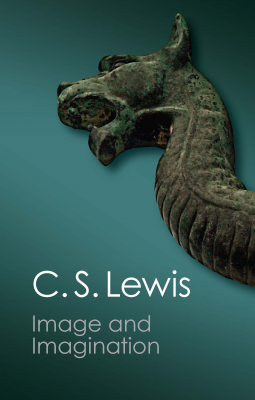
Image and Imagination: Review


Last week, a number of bloggers posted in commemoration of C. S. Lewis’s death 50 year ago. (In particular, you might like the posts by Lars Walker and Rebecca LuElla Miller.) While I grew up reading Lewis’s Narnia series and have since read a large group of his other works, I don’t have anything profound to add to their thoughts. Over the past week, however, I have been reading a new collection of Lewis’s essays, Image and Imagination, released last Friday.
 
It would be fair to start by asking why yet another collection of Lewis essays? We already have his fiction, dozens of his essays, and volumes of his letters, so why the need for another book? The simple answer is that this book is a collection of Lewis’s academic writing. The challenge is that Image and Imagination is largely a book about literature and the analysis and study of literature, though a more mixed collection than The Allegory of Love or The Discarded Image.

Image and Imagination takes its title from an unpublished essay Lewis wrote, describing his thoughts on the link between reality and imagination. The rest of the book contain a variety of reviews, a handful of prefaces and introductions Lewis wrote for other books, and four out-of-print essays. Two of these, “The idea of an ‘English School’” and “Our English syllabus,” describe how Lewis viewed Oxford’s undergraduate English program. (Rather like Dorothy Sayer’s The Lost Tools of Learning , Lewis explains in these essays his thoughts on higher education's purpose and methods.)

As always, Lewis’s writing is excellent, and his essays are thought provoking, as far as their topics allow. I enjoyed the essays on the English program, if only because Lewis includes an argument about the true origins of English literature (Anglo-Saxon, of course, not Greco-Roman), while “Image and Imagination” takes on the old argument about the how readers understand literature from a different angle.

At the same time, Image and Imagination is a highly academic book. Just reading through some of the book reviews, I was struck by the absurdity of reading anyone’s assessment of a long-forgotten book—one which I’ve never read, am barely interested in for its own sake, and will likely never read. I suspect most Lewis fans, unless they happen to be literary scholars as well, will reach the same conclusion.

For Lewis fans reading Image and Imagination, the main value might be gleaning the various references to old Inklings friends, such as the set of essays on books by Owen Barfield, Charles Williams, and Tolkien. That, and the rare gem—as when Lewis writes in “Image and Imagination” on the impossibility of separating fiction from fact, of creating a world entirely in the author’s mind, without reference to the real world:

“To get a single blade of grass growing in that imaginary world you must make a world indeed—a real universe, self-sufficing in space and time. But only one author can do that sort of stage-set. On this view only God can tell stories.”


So, if you desperately need something new to read, or you need a Christmas present for your Lewis-loving English professor, you might find Image and Imagination interesting. Parts of it are certainly worth thinking about. Otherwise, you'll probably find his fiction or his other essays a lot more worthwhile.

[My thanks to NetGalley and Cambridge University Press for sending me a Kindle copy of Image and Imagination, in exchange for my honest opinion of the book.]