Pages

Thursday, February 28, 2013

Fearless: Book Review


Fearless or daredevil? The biography of Navy SEAL Adam Brown, Fearless is the story of a man without fear, who never stops, never hesitates. His story nearly gets derailed along the way, which becomes a major emphasis in this book.


Unfortunately, my biggest reaction to this book would be a minor rant about marketing. Fearless includes the rather lengthy subtitle “The Undaunted Courage and Ultimate Sacrifice of Navy SEAL Team Six Operator Adam Brown.” This, with the cover of the book and the general emphasis on Adam Brown as a Navy SEAL, suggests that the book is a military story. 

Author Eric Blehm, however, starts off his prologue by attempting to set this story apart as something different in its genre. Blehm suggests that this is not about a story about “Tom Clancy fiction”—the battle-scenes and behind-the-scenes thriller usually associated with military stories. Fearless is a good story, reasonably told, with plenty of military flavor, but don’t expect much inside info on Navy SEALs or their operations.

Rather, expect a different sort of behind-the-scenes story—one which tells Adam Brown’s journey through love, addictions, restoration, failing, struggling, and determination.

Fearless is actually the story of an Arkansas boy, who grew up in a great family, messed up big, found redemption, found an awesome girl, became an incredible husband and father, and incidentally was driven by his determination to join the Navy SEALs, and then to become an elite operator even within that elite group. To accomplish this, Adam Brown moves past injuries and weaknesses that most people would consider career-changers.

I do have to add a small caveat—parts of the story include strong language and crudities, but nothing an adult or mature teen couldn’t handle. Much of the rest carries a tone of hero-worship even when Blehm tackles a less-than-heroic story. I also found some frustration in the fact that the stories are all third-hand accounts from family and friends, but you can probably get a better sense of the book from the prologue and first chapter available here.

You can also find out more about Fearless online here. It might not be the best told story of the year, and I doubt it would have been written given a different ending to the story. But it is a story of incredible courage, determination, and redemption.

[My thanks to Waterbook Multnomah Publishing Group for providing me with a digital review copy of Fearless in exchange for my honest opinion of the book.]
 

Thursday, February 7, 2013

Les Misérables, Radio Theatre style


Three CDs, nearly three hours of recording—yet it’s only the cliff notes version of Les Misérables.

Over the past couple of weeks, I’ve been listening to the audio recording of Victor Hugo's novel produced by Focus on the Family’s Radio Theatre, available from Tyndale House Publishers here.

In this adaptation of Les Misérables, the story starts with a smoldering, resentful Jean Valjean, ex-convict, released from prison after 19 years of hard labor, caged in by the fear and prejudice of everyone he meets. His last, hopeless attempt to find shelter brings him to the Bishop of Digne. And, when the Bishop challenges Valjean to change, the ex-convict starts on a new journey, helped along his way by the Bishop's silverware and candlesticks. In this recording, the Radio Theatre cast does a fantastic job of voicing the characters—from Inspector Javert’s rigid determination to pursue the ex-convict, to innkeeper and ruffian Monsieur Thenardier’s bullying whine, to Valjean’s anger, pain, and gentleness.

 As usual, this cliff notes version has sparked my interest in reading the original. Sadly, I’ve read Les Misérables only once. I also haven't watched the musical or any of the movies, while the book has had to wait for a reread since high school, so I can’t say much about how well the recording has interpreted the story.

Over all, though, I suspect that this version of Les Misérables can’t really compare with the original. It also falls short of another Radio Theatre production that I am more familiar with—Charles Dickens’s A Christmas Carol (also available from Tyndale here). That seems only natural, of course, since Hugo’s novel is so much more immense and complex than a three-hour adaptation can convey.

For someone who isn’t familiar with Les Misérables, this version does seem a good introduction. And, for someone who just wants an idea of the novel, listening to this recording is certainly less intimidating than reading the massive story it follows. As for the story itself, it might be time to reread Les Misérables.

[My thanks to Tyndale House Publishers for sending me a complimentary review copy in exchange for my honest opinion of this recording.]

Saturday, January 19, 2013

This Week


Enjoy the photos! I'm running out of inspiration at the moment, or else I'm just running out of the attention span and focus.

Either way, I don’t expect to be post regularly for the next few months. I’ll still try to put up an occasional review, perhaps a few photos, maybe a brilliant idea or two if I find them, but it’s time for a sabbatical of sorts.


Friday, January 11, 2013

Would you go to the moon?


No one has asked me recently if I want to go to the moon.

At least, if anyone has tried to email me or send me notices of a free space flight, a once-in-a-lifetime offer of a trip to the lunar satellite—well, the notices haven’t yet shown up in my inbox or my mailbox.

But I have wondered recently—if someone offered me a trip to the moon, what would I say?

Some people could probably tell you what I would say…it depends…

But what does it depend on? How many months or years of preparation it would take? How nervous the idea of space travel makes me? How well the safety statistics are balanced toward survival? How much I might or might not have dreamed of walking on lunar dust?

Or does it just depend on whether I can say yes or if I’m more comfortable hiding behind the answer no?

How often do we miss adventure just because we decide it’s not for us—that space beyond our tiny layer of atmosphere is just too far beyond our comfort zone?

In other words, if someone offered you a free trip to the moon, would you take it?

Friday, January 4, 2013

The Book List


Last year, I found a number of new books that I wanted to share with you. I had meant to end the year with a post about those books. Holidays and the rest of life happened instead, though, so enjoy!

#####

Four in a row…with more to come.

“I just called you Sir Horace of the Order of the Oak Leaf… At least, that’s what I think I told him. I may have said you were of the Order of the Oak Pancake.”

Last year, one of my students told me about John Flanagan’s Ranger’s Apprentice series, and when I got back from Alaska this fall, I found my family reading them. Flanagan stays pretty close to basic questing fantasy, with Will in the first book as the orphan of unknown parents, coming of age and claimed for training by old pro Halt, the Ranger, a mysterious man, able to come and go as if by magic, and definitely a very important person to the kingdom’s safety.

There is some world-building, but for Flanagan that seems to mean that across the Narrow Sea from Araluen, the Gallicans speak, well, pretty modern French and act like fairly typical French chevaliers. Overall, the books have nothing too serious to keep track of, and quite a lot of personality clashes to keep things lively. Perhaps I was just in a mood to laugh last week, but may I say that the four books I’ve read so far were a riot?


Three…wait? I’m reading Romance now?

It’s almost like a contagious disease…in February at a writer’s conference, I picked up Where Wildflowers Bloom, by Ann Shorey, one of the speakers. It was well written, with an interesting mix of Civil War veterans, the Oregon trail, and frontier shop keeping. Shorey even introduces the idea of PTSD without using the name, but still—love triangles tend to annoy me.

About May, I followed with Patricia Rushford’s Deadly Aim. Drug rings, gang wars and a police shooting in Sunset Cove, Oregon? And police officer—second-generation police officer—Angel Delaney ends up responsible for shooting a young boy. Rushford writes a good story, not too fast-paced, but with good action and thought involved, with plenty of surprises as well. And yes, it’s a police procedural, but it does have a good romance story—along with a very good look at the individual and community reactions to a police officer’s use of deadly force.

And what about airplanes? I picked up Bonnie Leon’s Touching the Clouds with just a vague idea that it was an Alaskan flying story. It is—Kate Evans runs away from memories of a bad crash back home in Washington and tries bush flying in Alaska instead. The story is pretty scattered—after one of the characters has a brush with wolves early on, wolves never show up again, and most of the plot is similarly loose except for Kate’s love triangle. At the same time, I found it definitely interesting to read Leon’s description of bush flying after spending the summer just across the Cook Inlet from the area Kate flies. I don’t think this book really gets the idea of Alaska across, but it is a good read.

Two…more fantasy. There’s a theme starting.

For some reason, I’ve also ended up reading a fair amount of YA fantasy/speculative fiction this year. I’ve enjoyed most of it. Some of it I won’t recommend, though sadly that includes some attempts at Christianized fiction that fall short even of lame.

One Christian author I did enjoy, with a reservation—Anne Elisabeth Stengl, with Heartless. It’s a good princess and dragon story. Or rather, a good story of a princess who isn’t too careful about avoiding dragonish thoughts and attitudes. Think a more extended allegory along the lines of Eustace’s story in The Voyage of the Dawn Treader. My only reservation came from the fact that allegories tend to get a little mixed sometimes if you think about them too hard.

At the other end of the spectrum was Rick Riordan’s The Heroes of Olympus. I’ve mentioned finding Riordan’s books earlier this spring, with some reservations about the junior-high attitudes in his Percy Jackson series. After reading The Lost Hero and The Son of Neptune, I’m enjoying this series better. The characters seem to have grown up somewhat, and in my opinion, the mythology plays a smaller role in these books, but I enjoyed the quests more.


One…also a fantasy, to end the list.

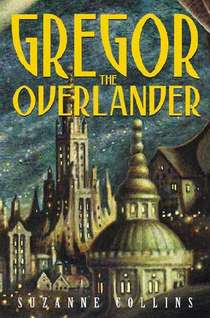
What book convinced me that I enjoyed Suzanne Collins’s writing? Not The Hunger Games. Rather, Gregor the Overlander.

Gregor who?

Gregor, the 11-year-old boy who follows his baby sister through a grate in New York, down into the Underland. It’s a children’s story, as much about protecting family and getting back home as it is about giant rats in the dark. But don’t ignore the giant rats either! (Or cockroaches, or spiders, or bats.)

I posted a short review of it here, if you are interested, but I’m going to be reading the rest of the series one of these days, and Collins might be one of my favorite authors now. All because of Gregor, the Warrior.


Friday, December 28, 2012

A Sudden Glory: Book Review


How does God pursue us? How does he lavish His love on us? How can we feel His presence? What does it mean to abide in Christ?

Pick up the nearest Christian book catalogue, and you will find plenty of authors to explain their improved study techniques, their ideas for increasing your involvement, their ways to improve your prayer life, and so many other keys to changing your life. All of them, of course, want you to do something or change something about how you approach life. And if it sounds too intimidating to do all that? Don’t worry! There’s always another, more enlightening book on time management techniques…

I’ve had my share of busyness and failed goals over the years. I’ve had joys, letdowns, and plenty of opportunities to feel that I should be doing something more. I'm also—in spite of goals and busyness—rather inclined to distrust people who say you or I must do thus and such in order to achieve some higher level of spiritual knowledge.

Thus, I was intrigued recently to find a very active, very involved conference speaker, ministry leader, and women’s author who thinks that we just might be trying too hard.


In A Sudden Glory, Sharon Jaynes argues that we’ve got the wrong picture—we have projects and goals and lists and agendas all designed to move us closer to God. We might know we can’t actually reach God through our own efforts, but we live as though we can. We check all the little commands off and worry about weekly Bible studies, church programs, and daily devotionals, while forgetting God’s call for us to be still and just spend time with Him. According to Jaynes, we’ve forgotten how to stop.

This isn’t a book to be read in one sitting—I’ve sat down with it a couple times so far, and I suspect it will take a couple more times to get through everything Jaynes has to say. This is, however, a timely reminder for just about any stage of life. A Sudden Glory shows much about what it means to trust God, to raise our expectations in light of God’s power, and to choose intimacy over routine. And, I would recommend the book just for the stories Jaynes shares of her own encounters with God along the way, as well as the reminders of His incredible glory.

Most importantly, Jaynes calls for us to be more aware of God’s glory in our lives and in the world around us. For Jaynes, a sunbeam at dawn becomes an image of God’s face shining upon her. A lesson on ballroom dance with her husband becomes a lesson on trusting God’s leading in life’s surprises. And, in her first chapter here, a few minutes of silence away from busyness become a lesson in being still and knowing God.

You can find out more about Sharon Jaynes on her website or through Waterbrooks Multnomah.

[My thanks to Waterbook Multnomah for sending me a free review copy of A Sudden Glory in exchange for my honest opinion of the book.]

Friday, December 21, 2012

At Year's End

The year has been traveling fast…


Just this Tuesday, I looked at the calendar and realized that the following Tuesday would be Christmas day. There are Christmas cookies, and Christmas Carols, and even Muppet Christmas Carols in the air.

 
If I were better at journaling, I could tell you more of what this year has brought. Teaching logic, surprise beach trips, flights to Alaska, long work days, home with family and friends, some writing over the summer, lots of writing over November for NaNoWriMo, changes, surprises, expectations of changes, and lots of happiness.
 

By my count, there is only one more week left to this year. Next week, for my last blog post of the year, I am hoping to review a few more new books from my reading.

And then it will be the beginning of a new year. I expect even more changes to come in this next year, but the most important part of life doesn’t change, that:

“Down in a lowly manger
The humble Christ was born,
And God sent us salvation
That blessed Christmas morn.”

And so, in spite of presents and change and busyness:

“Come to Bethlehem and see
Him whose birth the angels sing;
Come adore on bended knee,
Christ the Lord, the newborn King.”

Merry Christmas, my friends!


Wednesday, December 12, 2012

Finding the Family Tree

A cognate—according to Encarta—means a thing that is related to or has the same parentage as another. It derives from a Latin word which means “born together.” In the linguistic world, therefore, Cognate is a descendent of Cognatus as well as a possible parent or brother to Cognada in Spanish.

Today I went to my last Spanish class of the year, which means I’m once again thinking of words, their roots, and their meanings…

If you are working on la computadora, for example, is it more fun to use the mouse and pulsar or else hacer click en el ratón, “to make a click on the mouse”? If, unhappily, someone has not learned to read, is it better to say that person is illiterate or that he is analfebeto, without the alphabet? And, how is the Spanish embotellamiento, or bottling up, related to or derived from the English “traffic jam” or “bottleneck”?

As an English speaker, I find it relatively easy to use the familiar cognate, the word that looks like someone you’ve already met. If you can find the remote—or at least remember its name—then it’s not too hard to guess that el remoto controls the TV set. Still, who stops to consider that el mando a distancia performs the same function by sending or commanding the TV at a distance?

Words are lovely things, when you stop to think about them. It's rather like listening to children learning how to speak—we get to hear the old things in a new way.

One of my long-held favorites is, in fact, that thing which others curse…being put on hold. No one wants to be held off—but what if, instead, you are asked “to be in hope,” estar en espera?

And, of course, there is always the Spanish word for an engagement or una compromiso matrimonial. My first thought was to match this word with a compromise or lowering of morals, not the proper ideal for a marriage at all. However, a marriage does at times require compromises or mutual concession, so perhaps the word is fitting. Even more appropriately, a marriage is a promise which a man and a woman make con, or with, each other.


(In the tangled family of words, it may be tricky to guess which language borrowed from another, but at least I can figure out my own family easily enough. Cognates, also according to Encarta, include anyone having the same ancestry, anyone related by blood. So, I rest assured that my siblings are among my many cognates.)

Thursday, December 6, 2012

Making Progress

Rome, I’ve been told, wasn’t built in a day.

Neither is a novel written in 24 hours.

Hardly even is a novel written in a month, despite November’s official title as National Novel Writing Month. That’s not to say, though, that it’s not fun to try.

A month ago, at the beginning of November, I started into NaNoWriMo with about 300,000 other writers. The goal? To finish the month with 50K words written on a new novel project. The month is now over, and the results are in.

And, yes—I made it!


To be precise, I wrote 50,405 words between November 1st and November 28th. Since I didn’t write on Sundays, and missed a couple Saturdays along the way, that means I averaged just over 2,000 words per day.

Soon, if things go well, I’ll get back to a more normal writing schedule, start posting more regularly, and perhaps put up a few more book reviews. In the meantime, I’m looking back at November with a small amount of shock and some satisfaction…

On the exciting side of life, I have proved it possible to sit in front of a computer and command myself to type reasonable and grammatical—more or less—sentences until I reach a 500 word or a 1,000 word, or even a 4,000 word goal. Painful, certainly, but doable.

I also now have 50K words written for the fifth volume of my Areaex fantasy series.

On the depressing side of life, however, I may not get around to working on either of my current novels before the end of the year. My brain is still functioning, I think, but the momentum ran out along with the deadline. I’m not entirely sure when I’ll get it back. Maybe if I set a smaller goal? Say 1,000 words per day? I’ve proved it can be done!

(Also, I have now 50K words written on the fifth volume of my series. It might work as the first third of the novel’s plot, once I figure out how to write the other two-thirds and cut this section in half.)

So, I’ve made progress—which means that now (as usual), it’s time to keep going.

Perhaps it’s time for a miniscule, insignificant goal, like 500 words per day? I no longer have an excuse not to.

What’s your favorite way to get things done?

(P.S. Congratulations to all the other writers who participated! And a huge thank you to all of you who encouraged me and other writers along the way.)
 

Saturday, December 1, 2012

The Girl in the Glass: Review

What is more indefinable than love? A story about love, perhaps.

I received a review copy of Susan Meissner’s The Girl in the Glass a couple weeks ago, but just managed to pick it up this week at the end of a busy month. The plot is relatively simple—Meg, or Marguerite, wants to see Florence, her grandmother’s birthplace and Meg’s dream home. She wants her father to take her there, because she wants to believe her father still cares for her after her parents’ divorce nearly twenty years before.

And Meg wants to figure out what love is supposed to be.


As a novel, Meissner’s story is a well crafted and interesting read, weaving three storylines together through three different narratives. The story is told mainly through Meg’s firsthand account, alternating with brief chapters from Medici principessa Nora Orsini’s diary. The third story comes through sections of Sofia’s essay-style memoire, which Meg’s employers—a small publishing agency for travelogues—may be about to publish.

Overall, it was fairly easy to swap between the two main chapter types, but I found Sofia’s memoire to be relatively weak. As much as the Meg and her friends rave about Sofia’s writing, I found those sections less compelling than the rest of the story, and I was happy—once Meg made it to Florence to meet Sofia—to see the memoire sections end soon after. Sofia’s story flowed better as part of Meg’s, besides providing the major plot twist and the key to tying all three storylines together by the end of the book.

As a romance novel, the story was fantastic—complications, tangled love interests, confusion, and doubt abound. The story turns to one basic question repeatedly—if someone likes a person, is a liking enough for love, and if it is love, is it actually love or just love? It’s significant that Meissner prefaces the story with Pablo Picasso’s quote, “Everything you can imagine is real.”

For myself, I enjoyed parts of the story. I might not reread the book, but it was worth some thought to understand Meissner’s picture of love.

Oddly enough, though, I found The Girl in the Glass to be almost as much about failed love as it is about the search for love. By my count, there are only two happy ‘successful’ marriages mentioned in the story. Meg’s ex-fiancé marries early in the story, but more in passing than as a plot point. All the other characters come from broken relationships or divorces.

At some level, I found the number of broken marriages disturbing—though frustrating might be a more accurate word. Sofia’s story introduces a difficult question about reality and how someone can shape their reality. And honestly, while I appreciated the amount of love and enthusiasm Meissner infused into her descriptions of Florence, I found myself skeptical a couple times, especially when Meg and Sofia discuss an old Italian poem by one of the Medicis. The poem’s ‘lesson’ involves a sort of wordplay—“pearling” and “purling”—that usually would not translate from another language into English. It’s my quibble, because I happen to love words more than renaissance paintings or romance stories, but it did stand out to me.

For more information, you can read the first chapter here, or find out more about The Girl in the Glass and Meissner's other books through Waterbrook Multnomah’s site. The Girl in the Glass is a good story for someone who appreciates travelogues or romance, but I might not suggest it as a first read for someone new to either genre.

[My thanks to WaterBrook Multnomah Publishing Group for sending me a review copy of The Girl in the Glass, in exchange for my honest opinion of this book.]